
 Image 1 of 2
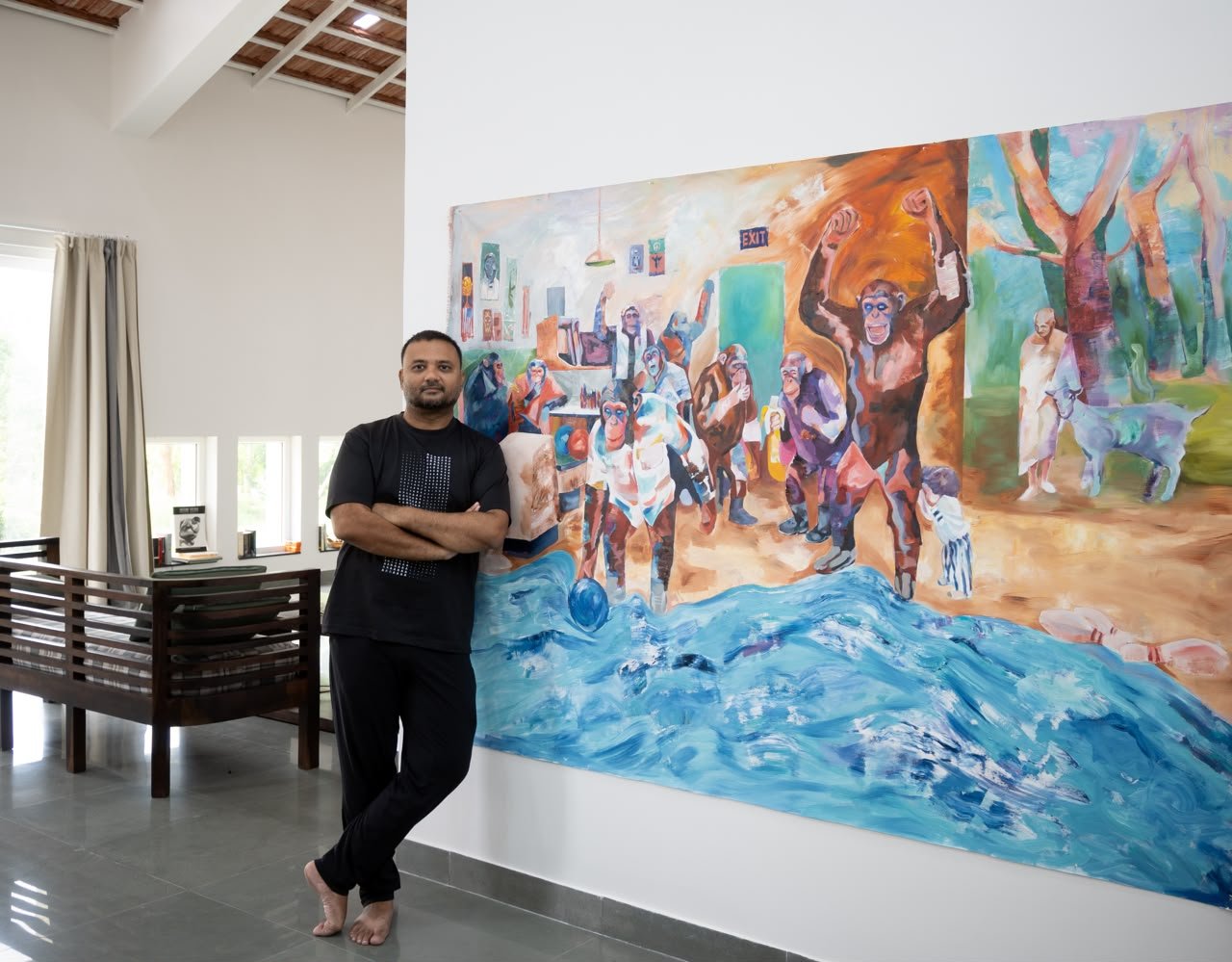 Image 2 of 2
Oil Paint on Canvas
2026
183 x 137.16 cm.; 72 x 54 in.
Price: POA
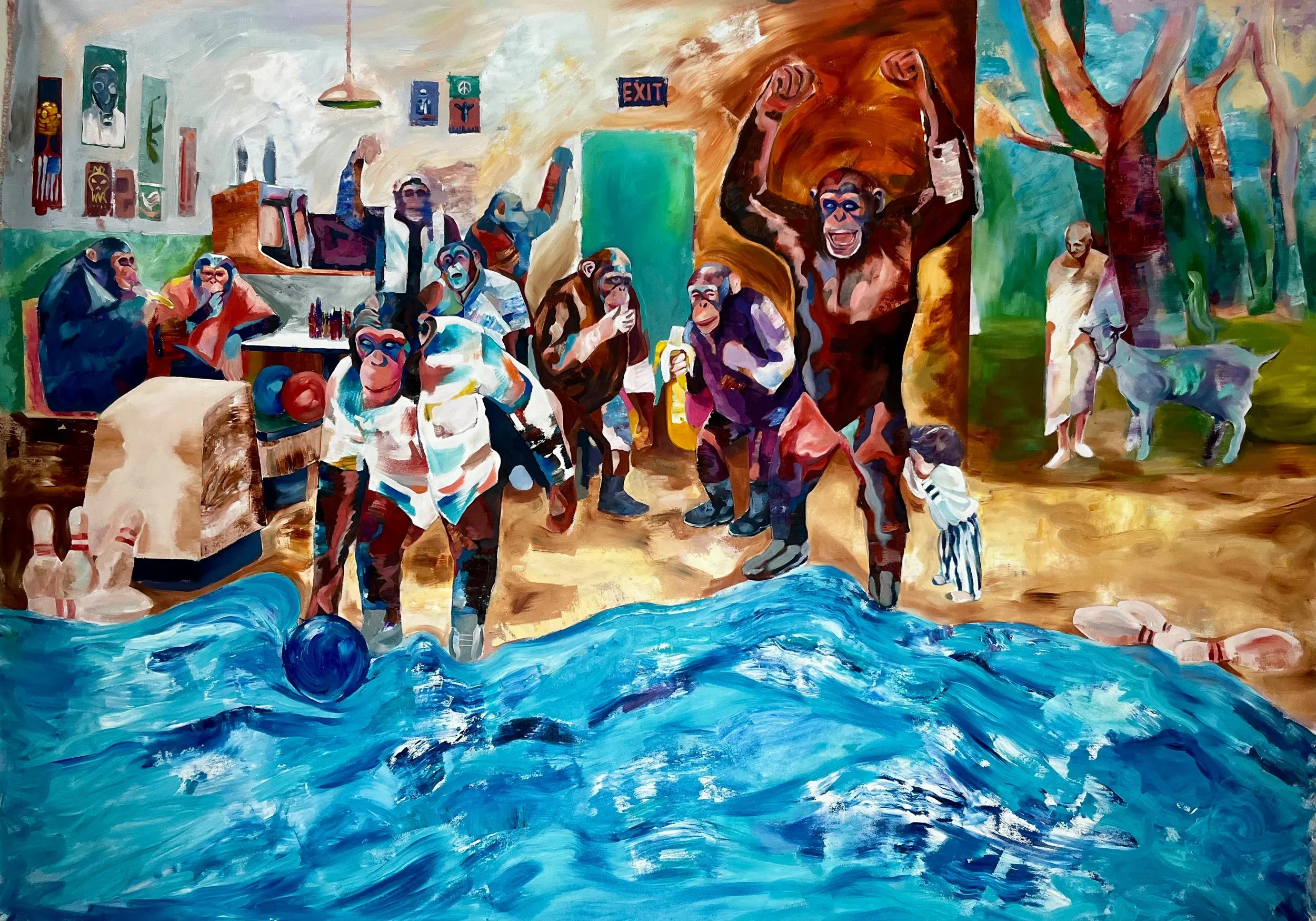
This painting reflects on the strange relationship between power, consequence, and distance in an increasingly interconnected world. The bowling alley becomes a metaphor for global politics, where decisions made by a handful of actors can travel far beyond the room in which they originate.
The monkeys casually hurl bowling balls into a body of water whose form echoes the Strait of Hormuz—a narrow passage through which flows an extraordinary share of the world’s energy and commerce. The gesture appears playful, almost absurd, yet every ball thrown into the water creates ripples that eventually return. Like political decisions, economic sanctions, military actions, or diplomatic failures, their consequences rarely remain local.
In contrast, Gandhi appears quietly in the background with his goat. When Gandhi travelled to England in 1931 for the Second Round Table Conference, he famously took goats with him, choosing to rely on their milk rather than the food and comforts offered by the Empire. I see this gesture as a form of performance—an act of embodying simplicity, self-reliance, and independence. Rather than confronting power through force, Gandhi used an ordinary object and a simple act to communicate a political idea.
His presence in the painting recalls a different language of leadership—one rooted in symbolism, restraint, and moral imagination. I have always been fascinated by how a simple gesture or an ordinary object can communicate an idea more powerfully than displays of force.
The painting therefore places two contrasting worlds side by side: politics as spectacle and politics as symbolic action; power expressed through force and power expressed through restraint. Between them lies the question of consequence—how our actions, however distant or seemingly insignificant, create ripples that extend far beyond their point of origin.