
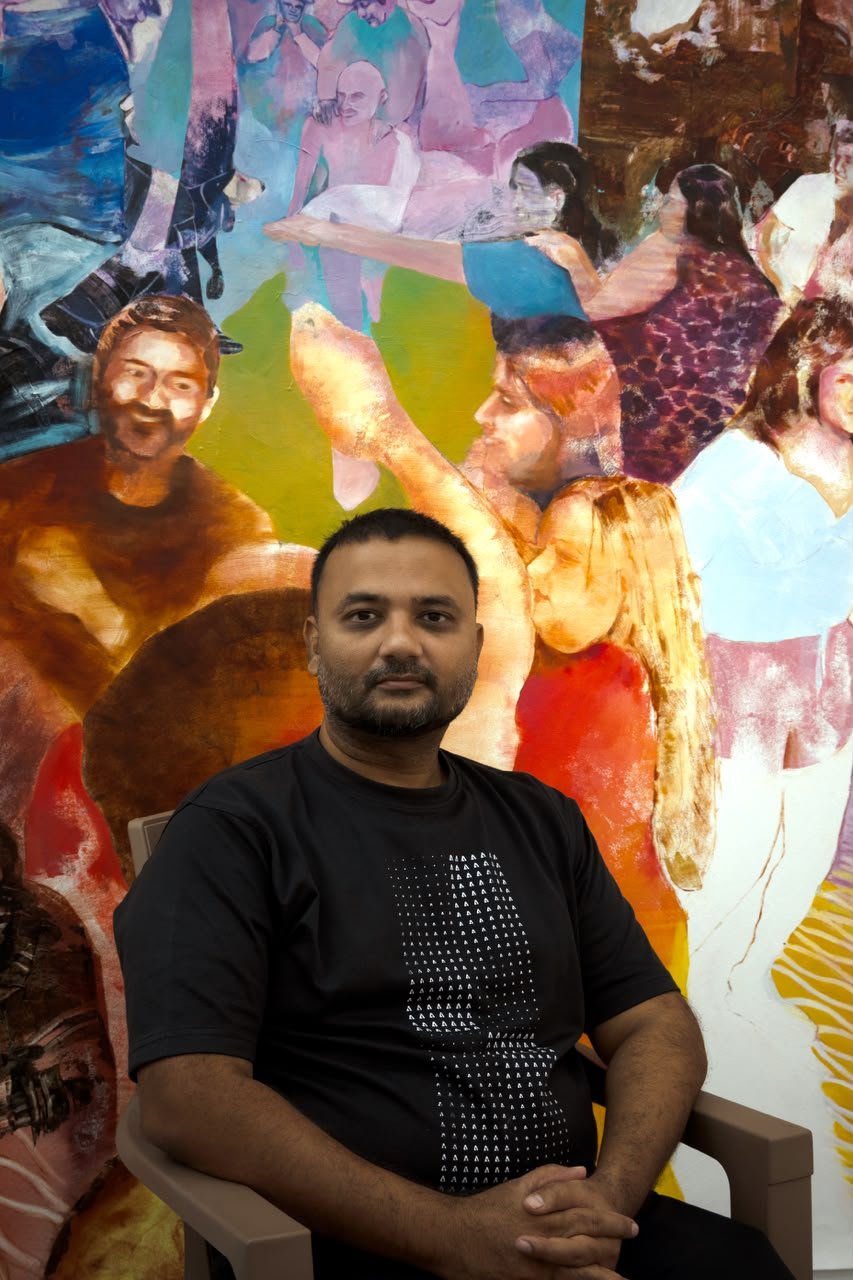
Based in
Bangalore,India
Mediums
Themes
Education
Selected Exhibitions
Oil on canvas, ink on paper
Identity, belonging, urban psychology, surveillance and social connection
2023: Bachelor of Visual Arts, Bangalore School of Visual Arts (CKP)
2002: Design Management, National Institute of Design
2000: Graphic Design, National Institute of Fashion Technology, New Delhi
Collections/ Recognition
2025: Truth to be Told, Immerse 4.0, Mumbai
2025: The Fresh Produce, Method, New Delhi
2024: A Cohort, Gallery Time and Space, Bangalore
2025: Immerse 4.0 Fellow (Mumbai)

Rhizoscape: The Living Network exhibition in London will be showcasing some of this artist’s work from 19th February to 4th March 2027
Vinay Dixit
Figurative painter examining the social pressures and private solidarities of contemporary urban life.
Vinay Dixit's practice sits at the intersection of memory, migration and the psychological cost of contemporary city life. A network is rarely invisible because it is abstract; it is invisible because its effects have become ordinary: the demand to be seen, the fear of being judged, the quiet labour of finding one's place. He calls the complexity beneath everyday scenes "Simplexity".
Vinay Dixit is a contemporary figurative painter and design strategist based in Bangalore, India. He holds a Bachelor of Visual Arts from the Bangalore School of Visual Arts (CKP) and was an Immerse 4.0 (2025) Fellow, with earlier education in Visual Communication at the National Institute of Fashion Technology, New Delhi.
Working primarily in oil on canvas and ink on paper, he draws on observation, memory and improvisation to explore identity, belonging and the complexity of apparently ordinary scenes. His background in visual art and design informs a practice attentive to both the structure of an image and the human experience it contains.
Practice Themes
Visibility and Judgement
Dixit paints the quiet toll of being watched and evaluated, showing how the demand to be seen and the fear of being judged shape ordinary behaviour in public and private life.
Belonging as a Built Process
Rather than treating belonging as a place one arrives at, his work presents it as something constructed between people through vulnerability, disorientation and reconnection.
Distant Consequence
Across the paintings, decisions and actions taken at a remove are shown to land unevenly on those who never made them, connecting intimate scenes to wider structures of power.
Moving between intimate encounter and global consequence, Dixit asks what it means to live among others and how much of ourselves those relationships allow us to keep.
-
2025: Truth to be Told, Immerse 4.0, Mumbai
2025: The Fresh Produce, Method, New Delhi
2024: A Cohort, Gallery Time and Space, Bangalore
-
2025: Immerse 4.0 Fellow, Mumbai
The Works
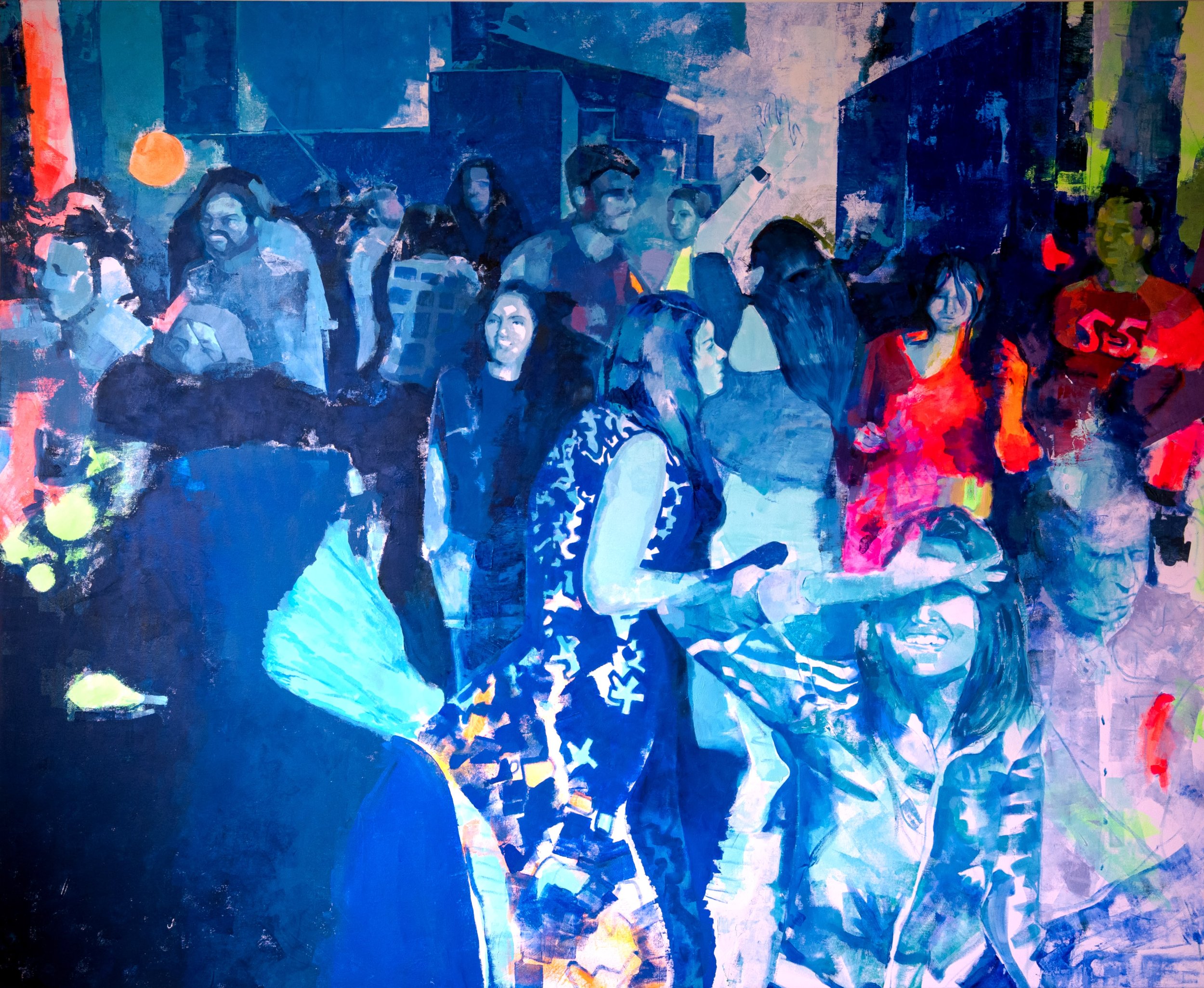
Vinay Dixit
Oil Paint on Canvas
2026
167.6 x 213.4 cm.; 66 x 84 in.
Price: POA
This series serves as a psychological cartography of the modern migrant youth experience within expanding global metropolises. ‘Lost’ documents the initial, suffocating erasure of the self-delving into themes of urban trauma, disorientation, and the desperate, often uncomfortable internal silence that accompanies the hyper-competitive race to remain culturally relevant and visible. The composition mirrors the chaotic fragmentation of entering an uncompromisingly demanding city life.
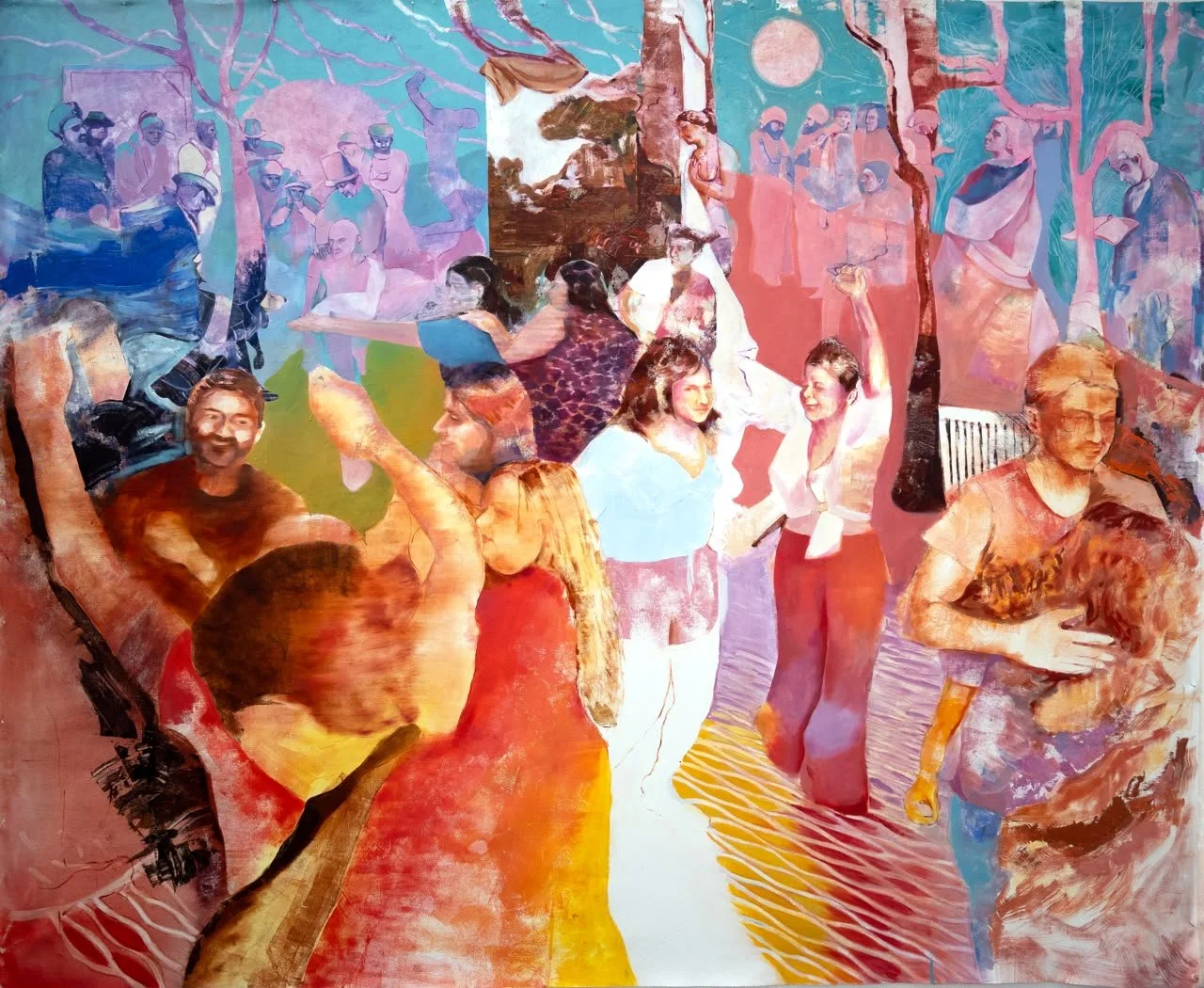
Vinay Dixit
Oil Paint on Canvas
2026
167.6 x 213.4 cm.; 66 x 84 in.
Price: POA
Conversely, ‘Found’ functions as a testament to collective resilience and human hope. It highlights how shared vulnerability and raw human connection become the most potentn tools for everyday psychological survival. By shifting from an isolating urban friction to spaces of genuine communal belonging, the diptych illustrates that while the global city induces structural displacement, the intuitive reclamation of community provides a crucial site for psychological repair and emotional endurance.
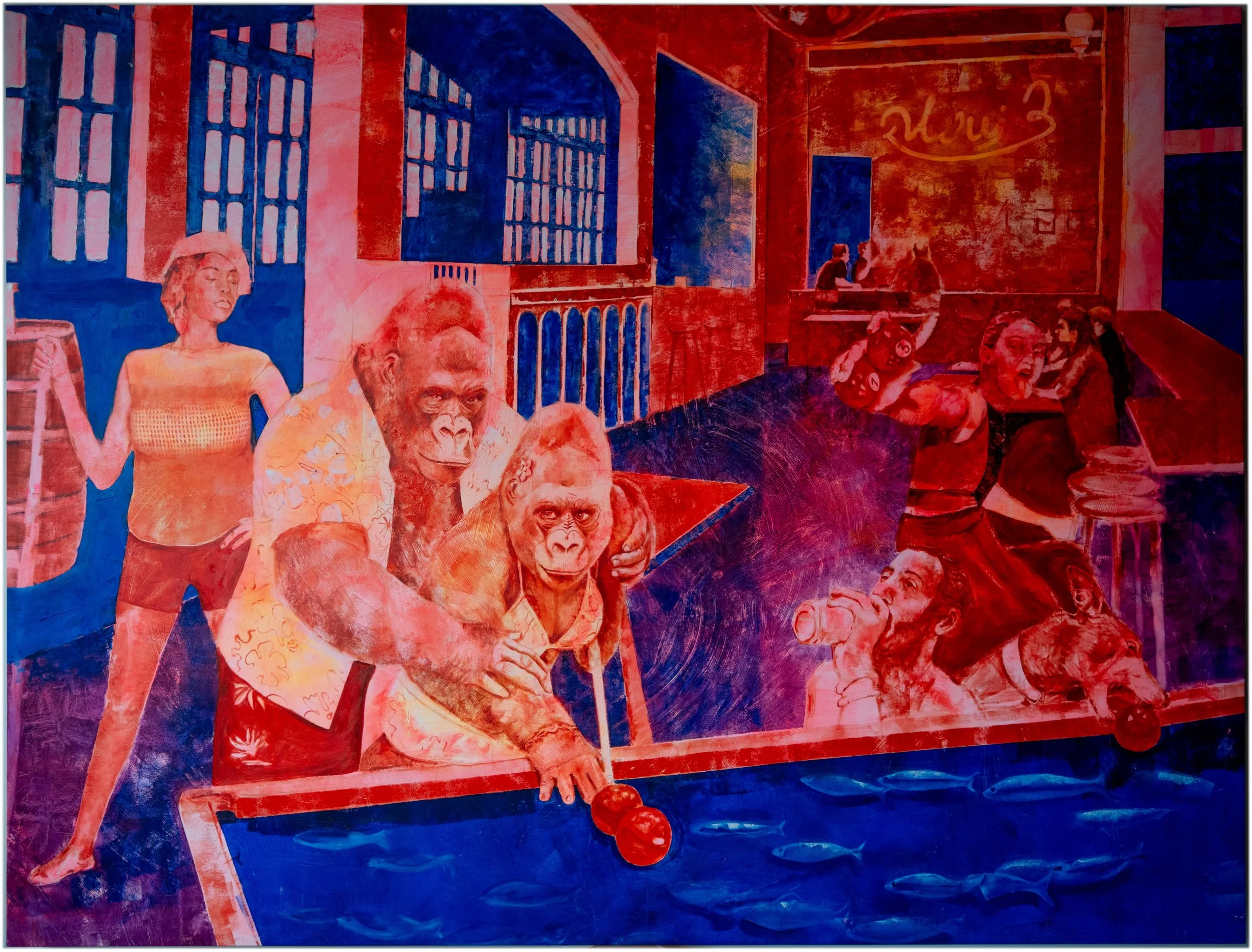
Vinay Dixit
Oil Paint on Canvas
2026
152.4 x 213.4 cm.; 60 x 84 in.
Price: POA
A viral 2025 corporate scandal, The Concert explores the suffocating reality of hyper-surveillance, public morality, and the performance of human behavior under scrutiny. Much like a quantum atom changing its state when observed, human action shifts violently when monitored by a judgmental public eye. Set in a crimson-tinted liminal space, the canvas integrates anthropomorphic figures playing snooker, a game subverted here into a corporate battleground of power, jealousy, and sexual politics. Amidst those holding the cue of institutional authority, the background hums with the quiet distress of the rejected and unseen.
Vinay Dixit
Oil Paint on Canvas
2026
183 x 137.16 cm.; 72 x 54 in.
Price: POA
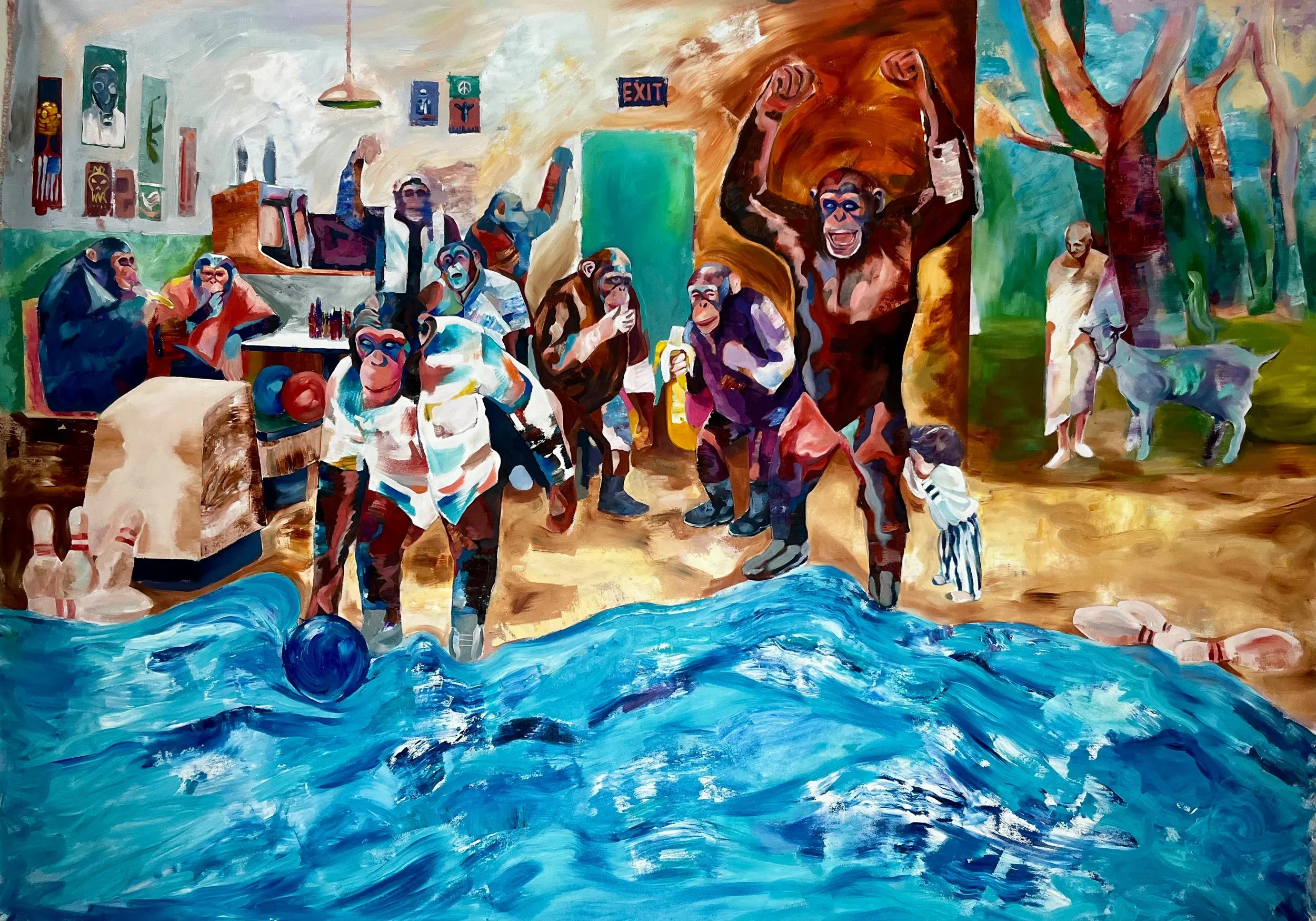
This painting reflects on the strange relationship between power, consequence, and distance in an increasingly interconnected world. The bowling alley becomes a metaphor for global politics, where decisions made by a handful of actors can travel far beyond the room in which they originate.
The monkeys casually hurl bowling balls into a body of water whose form echoes the Strait of Hormuz—a narrow passage through which flows an extraordinary share of the world’s energy and commerce. The gesture appears playful, almost absurd, yet every ball thrown into the water creates ripples that eventually return. Like political decisions, economic sanctions, military actions, or diplomatic failures, their consequences rarely remain local.
In contrast, Gandhi appears quietly in the background with his goat. When Gandhi travelled to England in 1931 for the Second Round Table Conference, he famously took goats with him, choosing to rely on their milk rather than the food and comforts offered by the Empire. I see this gesture as a form of performance—an act of embodying simplicity, self-reliance, and independence. Rather than confronting power through force, Gandhi used an ordinary object and a simple act to communicate a political idea.
His presence in the painting recalls a different language of leadership—one rooted in symbolism, restraint, and moral imagination. I have always been fascinated by how a simple gesture or an ordinary object can communicate an idea more powerfully than displays of force.
The painting therefore places two contrasting worlds side by side: politics as spectacle and politics as symbolic action; power expressed through force and power expressed through restraint. Between them lies the question of consequence—how our actions, however distant or seemingly insignificant, create ripples that extend far beyond their point of origin.
Vinay Dixit
Oil Paint on Canvas
2025
Each pieces: 91.4 x 91.4 cm; 36 x 36 in.
Price: POA
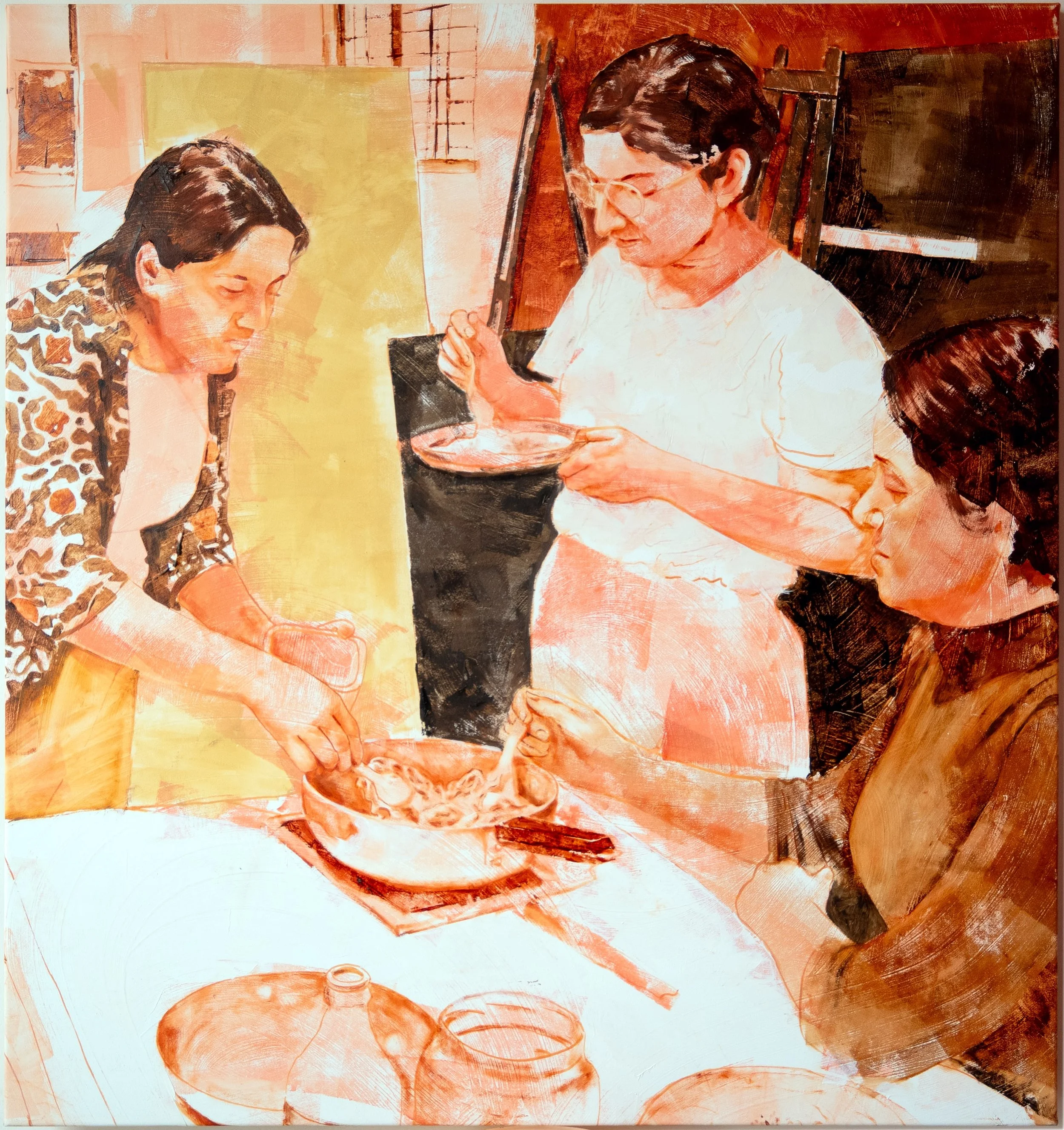
This series operates as an intimate visual inquiry into the overlooked rhythms of contemporary creative labor, focusing on moments of shared sanctuary among female artists in the studio space. Serving as a deliberate, reversed reflection on Vincent van Gogh’s The Potato Eaters, which documented the exhaustive, grim weight of survival, these canvases explore a counter-narrative of communal warmth, nourishment, and emotional resilience.
Rather than a somber portrait of hardship, I wish to capture the cooking and sharing of Maggi a deeply nostalgic, ubiquitous food choice among young adults in India as an intuitive, self-preserving ritual embedded within periods of intense, often unappreciated creative exertion. Through open, texturally layered compositions, the paintings explore the fluid boundary between work and rest. I am searching for a visual language that can honor the invisible emotional scaffolding built during these brief interludes, capturing moments of genuine laughter, human connectivity, and shared vulnerability that sustain the self within a demanding urban metropolis.