
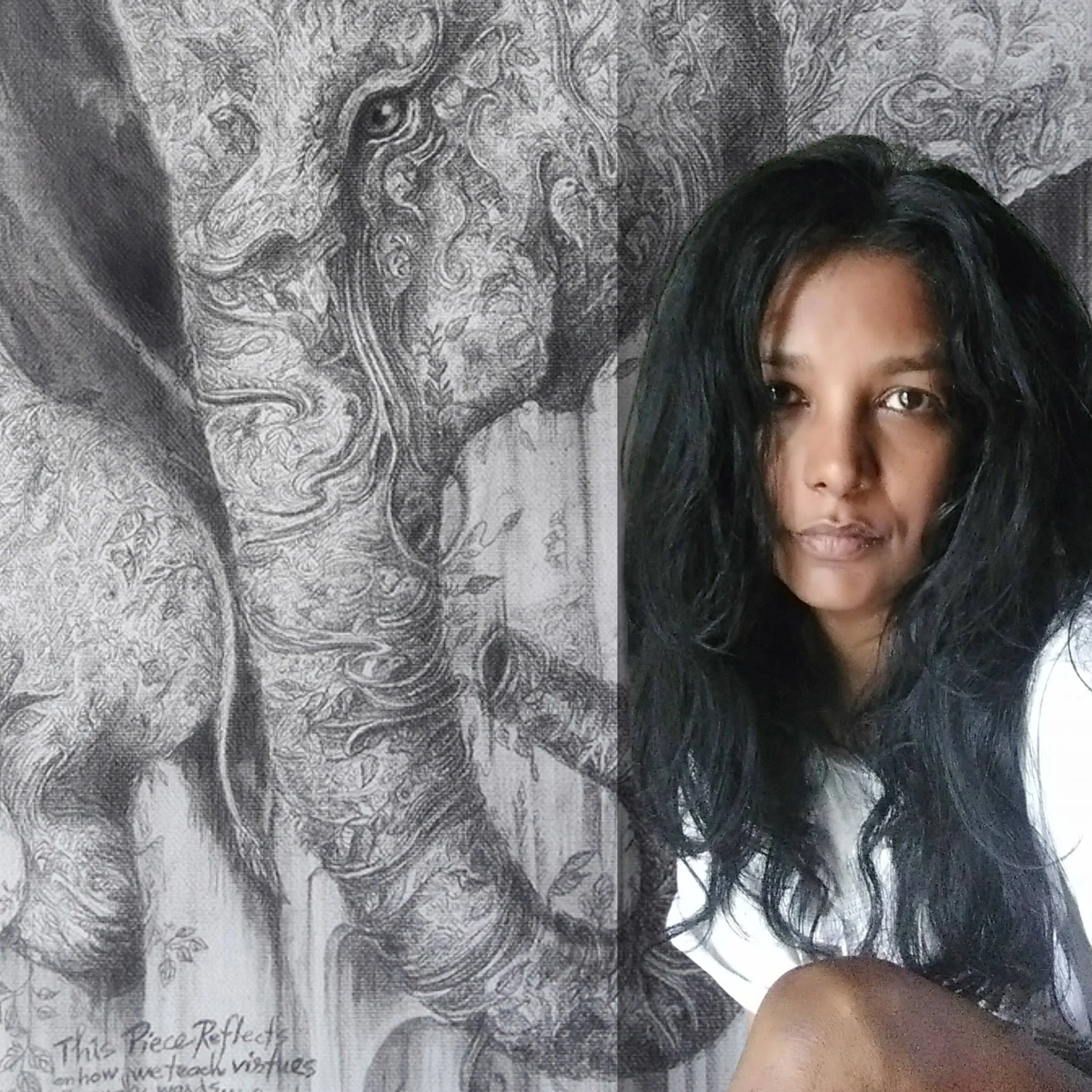
Based in
Selangor, Malaysia
Mediums
Themes
Education
Selected Exhibitions
Acrylic on canvas; graphite (mechanical pencil)
Interconnection, kinship, biodiversity, relational identity
Sain Academy of Arts, Penang (graphic design)
Collections/ Recognitions
Art Basel Hong Kong (installation, Wei Ling Art Gallery), 2013; Affordable Art Fair Singapore
International Contemporary Artists 2013 publication; Marie Claire Malaysia “Woman of Style and Substance,” 2013; Harper’s Bazaar Art Power List

Rhizoscape: The Living Network exhibition in London will be showcasing some of this artist’s work from 19th February to 4th March 2027
Christine Das
A contemporary Malaysian artist exploring the interconnected relationships between humanity, wildlife, and the living world through fluid, biomorphic compositions and finely rendered graphite drawings
Christine Das is a contemporary Malaysian artist whose work explores the interconnected relationships between humanity, wildlife, and the living world. Through fluid, biomorphic compositions and finely rendered graphite drawings, she creates poetic meditations on kinship, biodiversity, and the invisible threads that bind all life together.
Born and schooled in Penang, Das trained in graphic design before a career spanning book illustration, mural painting, animation, and scenic art, including work on the 1999 Hollywood production Anna and the King — before turning to painting full-time in 2007.
Grounded in nearly two decades of environmental advocacy and collaborations with conservation organizations throughout Malaysia, Das transforms ecological narratives into emotionally resonant works that invite contemplation rather than instruction.
Christine Das's paintings dissolve the boundaries between species, landscape, and spirit. Animals emerge from flowing networks of line that evoke roots, waterways, neural pathways, and unseen ecological systems, suggesting that identity itself is relational rather than individual.
Her practice invites viewers to consider conservation not simply as environmental responsibility, but as an act of remembering humanity's place within a larger living ecology.
Practice Themes
Line as Living System
Das's flowing ribbons of line function as roots, rivers, breath, mycelial networks, and neural pathways — connective tissue rather than decoration.
Relational Identity
Human and animal forms merge and emerge from one another, suggesting that identity is relational rather than individual.
Nature as Consciousness
Animals emerge from energy and line rather than landscape — the works picture nature thinking, not nature observed.
Drawing on Malaysia's extraordinary biodiversity, Das creates works that are at once intimate portraits and meditations on interconnected life.
-
2015: Affordable Art Fair Singapore, Singapore
2013: Art Basel Hong Kong — installation project with Wei Ling Art Gallery, Hong Kong
2011: Malaysian Contemporary Art Tourism (MCAT2011), George Town, Penang & Kuala Lumpur
-
Featured artist, International Contemporary Artists 2013 publication
“Woman of Style and Substance,” Marie Claire Malaysia, 2013
Named to Harper’s Bazaar Art’s Power List of Extraordinary Women in Art
Named among Malaysian Women’s Weekly’s Great Women of Our Time
-
Cover feature, NATURALIST magazine (Malaysian Nature Society), September 2015
Interviewed for the Kuala Lumpur International Eco Film Fest (Durian ASEAN)
Profiled by Eksentrika: “How to Become a Wildlife Conservation Artist”
Ongoing conservation partnerships: WWF Malaysia, Borneo Conservation Trust, RIMAU / MENRAQ Orang Asli Patrol Unit, Danau Girang Field Research Centre (Cardiff University)
The Works
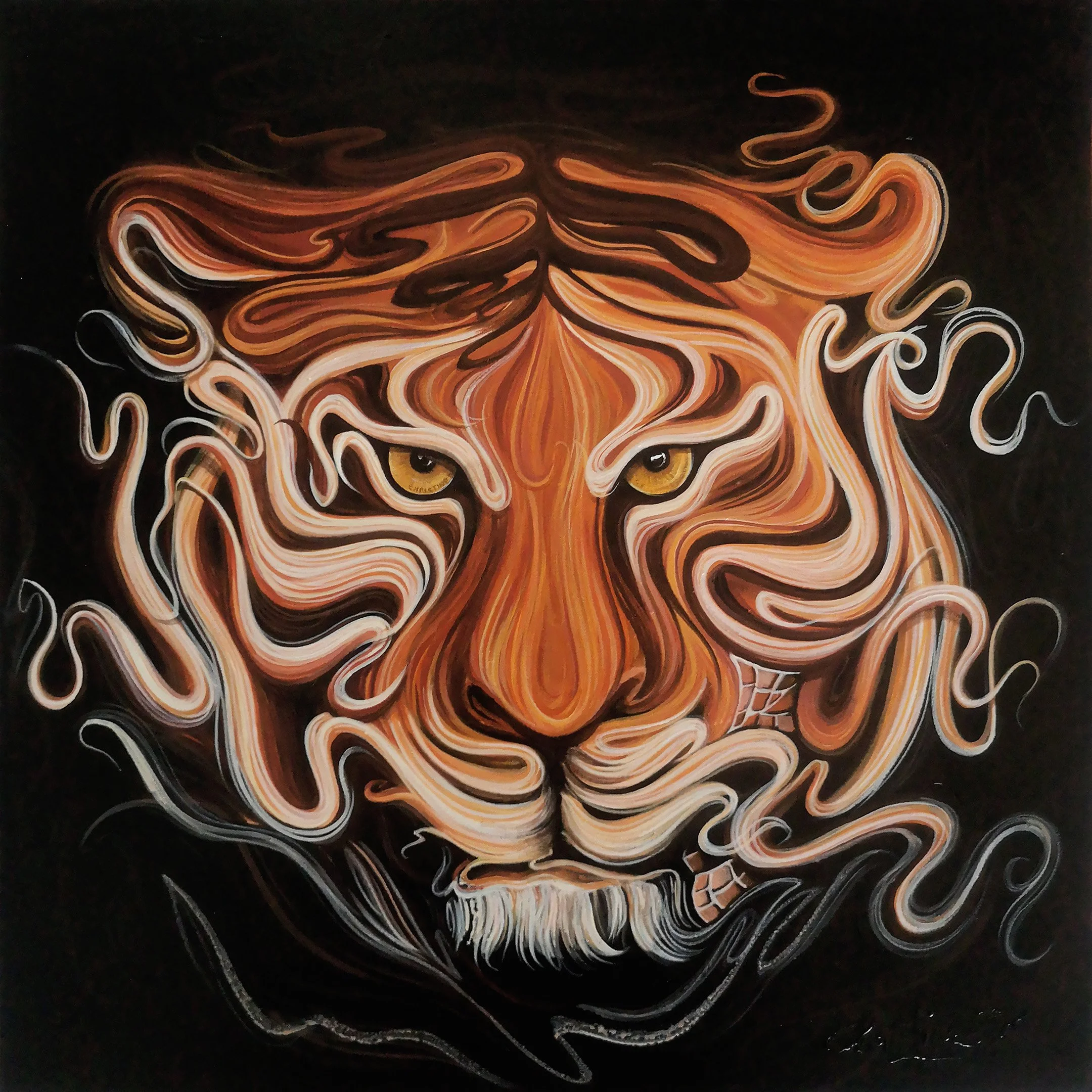
Christine Das
Acrylic on canvas
46 by 46 cm.; 18 by 18 in.
2023
Price: POA
My Harimau is both a tribute and a warning. Honoring Malaysia’s national icon and apex rainforest predator, the work reflects the devastating reality that fewer than one hundred Malayan tigers are believed to remain in the wild.
Part of the artist’s PLIGHT series, the painting transforms an alarming statistic into a deeply personal encounter. It celebrates the tiger’s beauty, strength, and ecological importance while reminding us that its survival is inseparable from the health of Malaysia’s forests. My Harimau asks us to consider what is lost when a species disappears and underscores the urgency of protecting one of the nation’s most treasured inhabitants before it exists only in memory and art.
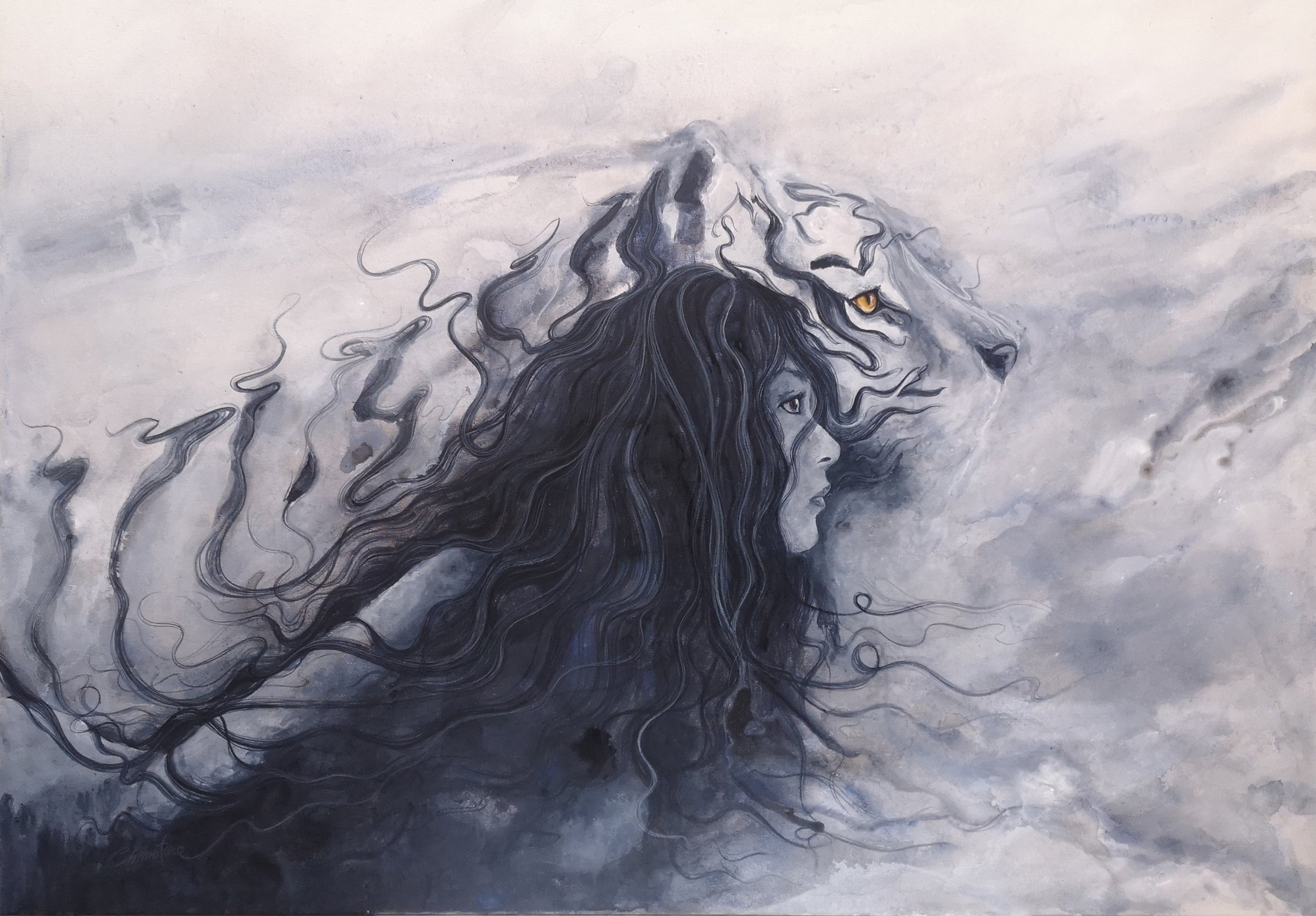
Christine Das
Acrylic on canvas
2019
91 by 122 cm / 35 ⅞ by 48 in
Price: POA
This portrait explores the quiet convergence of the human and natural worlds. A woman rests beside her spirit animal, a Malayan tiger, both poised low to the ground in the stillness before movement. Their unwavering gaze extends beyond the frame, drawing the viewer into a shared moment of instinct, awareness, and resolve.
Rendered in a restrained palette of soft grey acrylics, the composition dissolves the boundary between woman and tiger. Flowing strands of hair merge seamlessly into the tiger’s stripes, suggesting that the wild is not an external force but an intrinsic part of our identity. Rather than depicting dominance over nature, the work evokes kinship, reminding us that intuition, resilience, and belonging emerge through our connection to the living world. At its core, the painting is a meditation on identity, coexistence, and the untamed spirit that endures beneath the surface, inviting us to reconsider the invisible threads that bind humanity to the natural world.
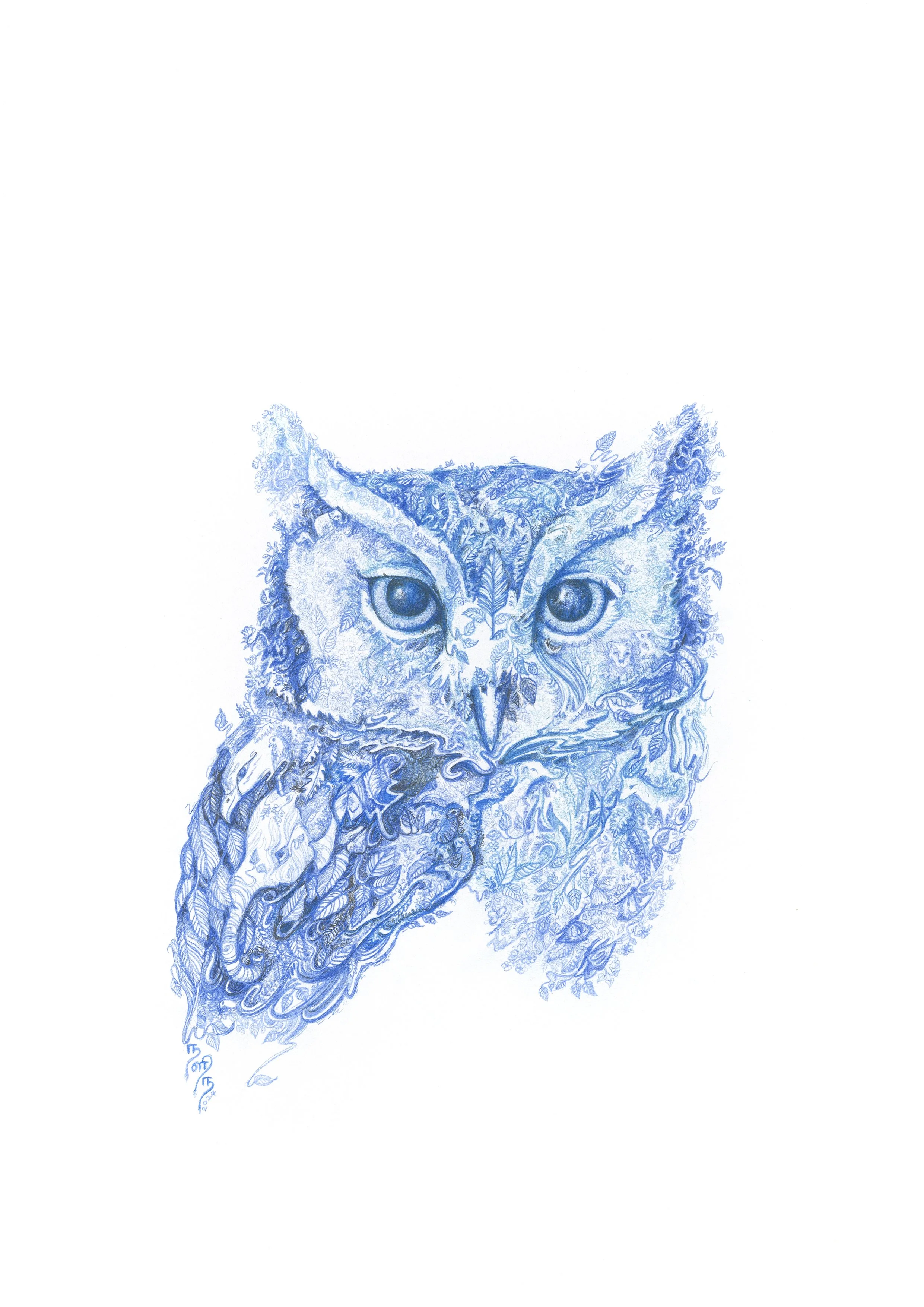
Christine Das
280 gms Ilford Cotton Sprite Paper
42 by 42 cm.; 16 ½ by 16 ½ in.
2024
Price: POA
The Blue Owl Series celebrates the beauty and often significance of Malaysia’s owls. Through finely detailed drawings, the work encourages viewers to slow down and recognize the intricate relationships that sustain the natural world. It reminds us that every species, no matter how elusive, contributes to the health and balance of its ecosystem, inviting a deeper appreciation for the interconnectedness of all life.
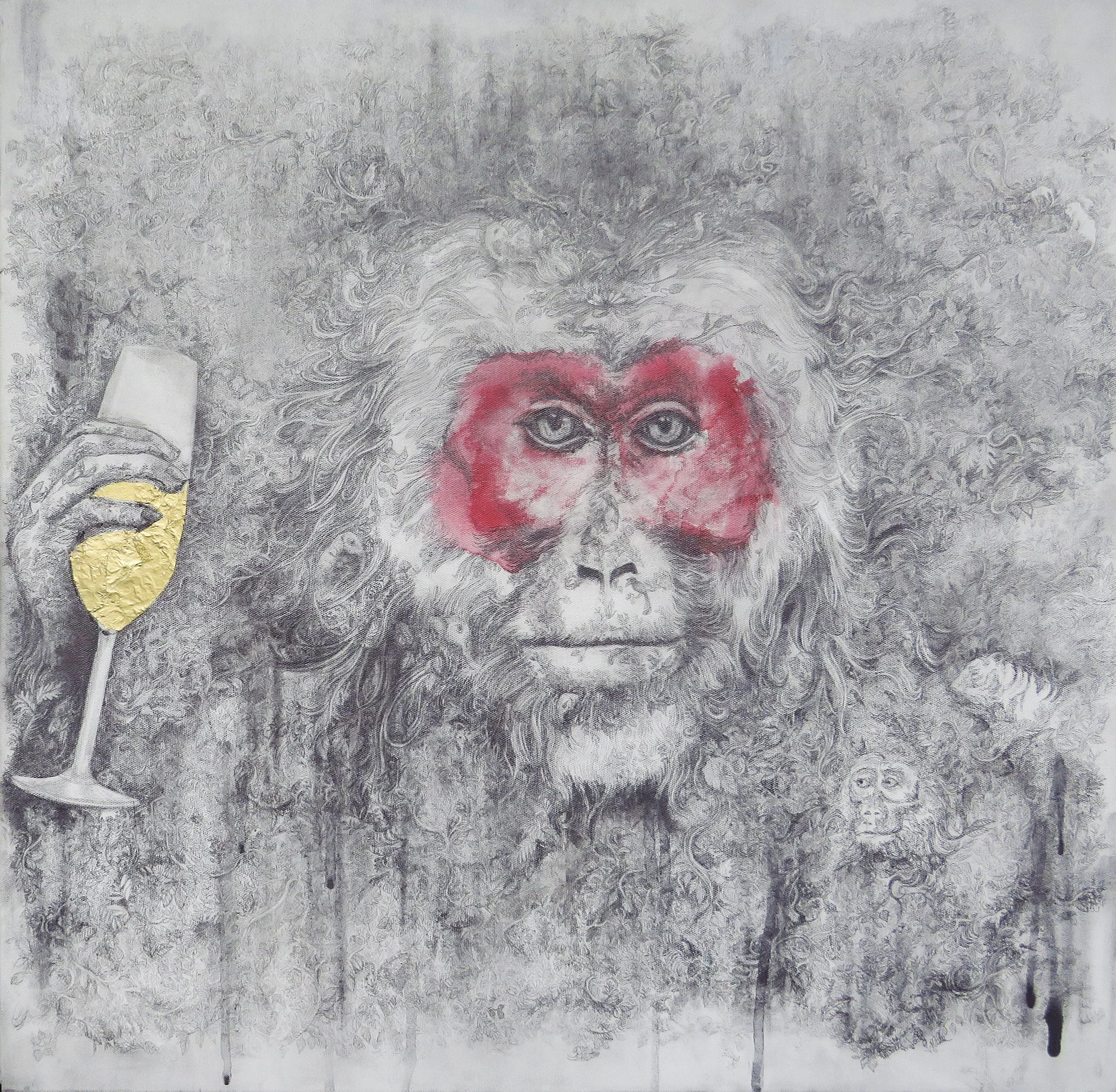
Christine Das
Graphite and mixed media on recycled plastic bottle canvas
2024
90 by 90 cm.; 34 ¼ by 34 ¼ cm.
Price: POA
Yam Seng (Chinese for “Cheers!”) celebrates the endangered stump-tailed macaque, a rare primate found in Malaysia’s smallest state, Perlis. Home to Perlis State Park, Malaysia’s first protected biosphere reserve, the region offers hope for this elusive species and its remarkable biodiversity. As many of Malaysia’s primates continue to lose their forests to habitat destruction, this work raises a toast to the protection of one of the country’s last strongholds for wildlife and the ecosystems that sustain it.
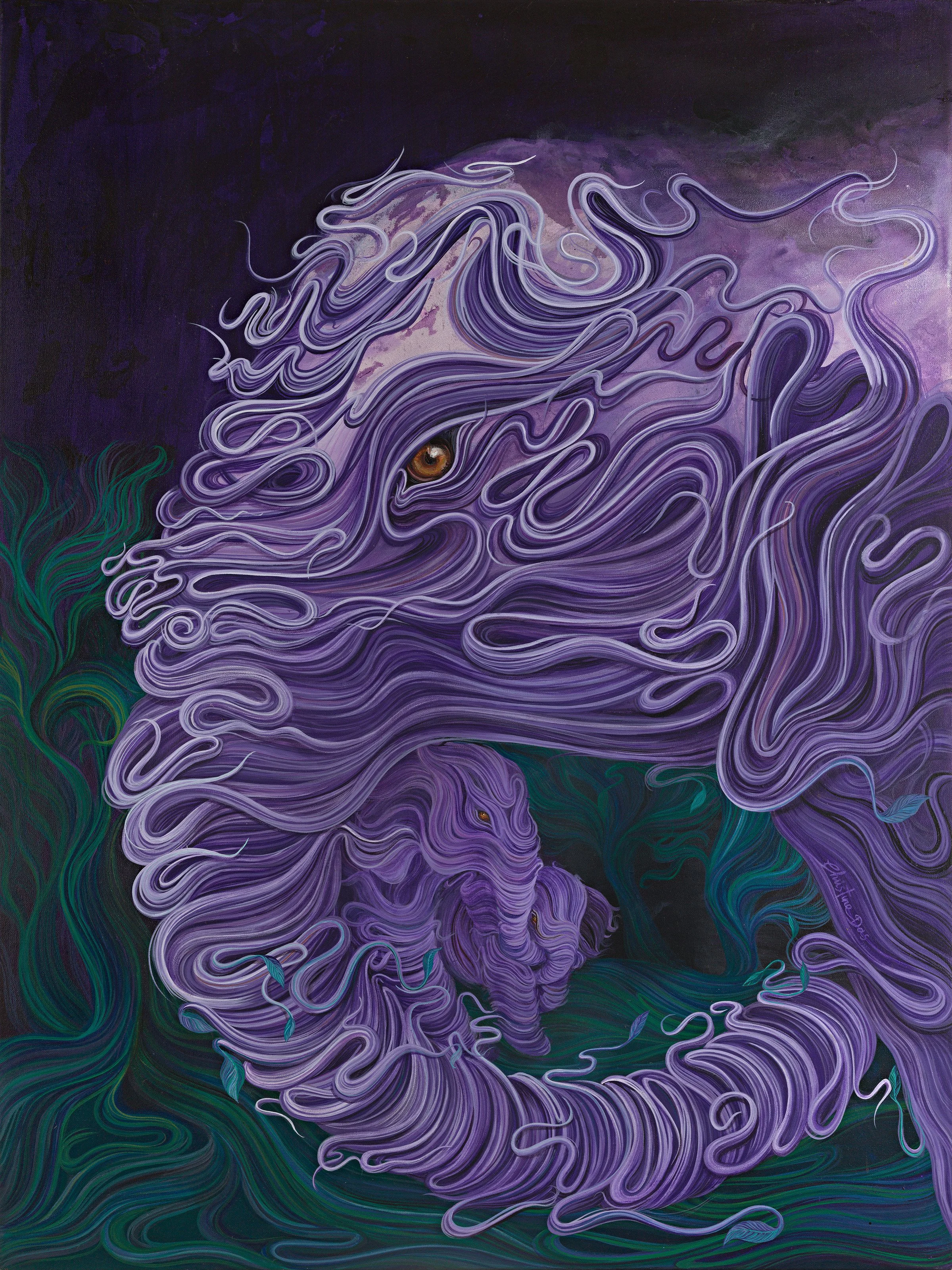
Christine Das
Acrylic on canvas
123 by 91¼ cm.; 48 by 36 in
2023
Price: POA
Entwined in Love honors the profound social bonds that sustain elephant families. Within elephant herds, mothers, grandmothers and aunts form intricate matriarchal networks, raising young collectively and passing on generations of ecological knowledge. Through these relationships, calves learn to navigate landscapes, locate food and water, recognize danger and thrive within their environment. More than a portrait of wildlife, the work reflects the enduring power of collective care, shared wisdom and intergenerational responsibility, reminding us that survival is often rooted in connection rather than individuality.