
Based in
Lahore, Pakistan
Mediums
Themes
Education
Selected Exhibitions
Graphite, variegated metal leaf on paper, mixed media, painting, photography, digital processes
Spirituality, tradition, contemplation, memory, identity, the visible and the unseen
2010: National College of Arts
Collections/ Recognition
2025: The Silence and Sound, Ocean Art Gallery, Karachi, Pakistan. 2024: Greener Pastures, Ocean Art Gallery, Lahore, Pakistan
Held in the collections of
Imran Qureshi and Aisha Khalid;
Iqbal Salahuddin, Pakistan;
The Luciano Benetton Collection, Treviso, Italy;
Yuri Harada, a family member of the owners of the Kampo Museum, Japan; and
Private family collectors in the USA, Singapore and Dubai

Rhizoscape: The Living Network exhibition in London will be showcasing some of this artist’s work from 19th February to 4th March 2027
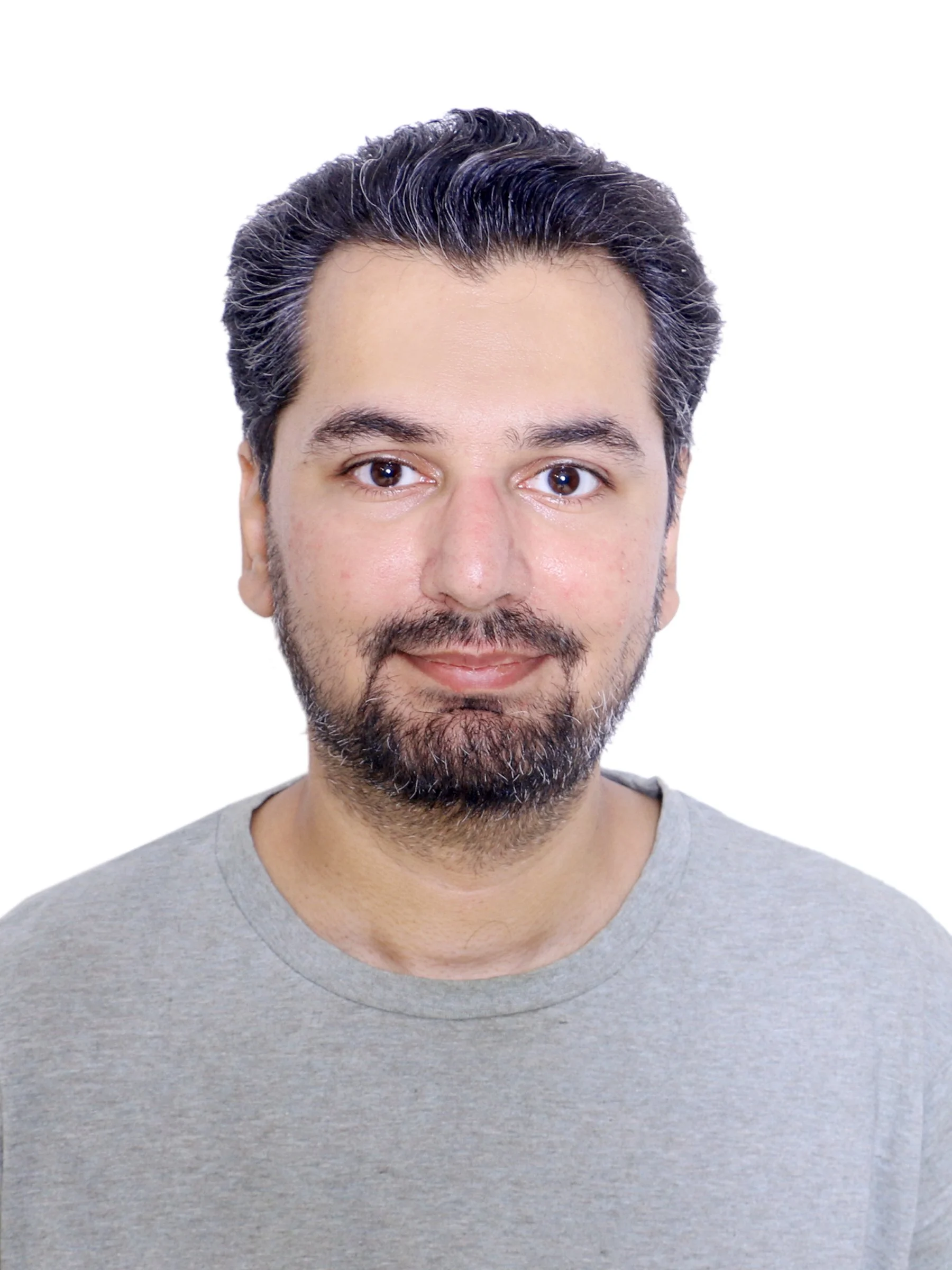
Ali Asad Naqvi
Interdisciplinary artist weaving Islamic calligraphy, geometry and Sufi contemplation into graphite and metal leaf works.
Ali Asad Naqvi draws on the formal vocabularies of Islamic calligraphy and Turkish illumination to examine how sacred visual traditions are transmitted, adapted and made contemporary. Working in graphite and variegated metal leaf on paper, he brings the measured repetition of geometry into tension with botanical and celestial forms: plants orient themselves towards light, while concentric lines accumulate around a moon-like centre. Informed by Sufi thought, these motifs operate less as illustrations than as contemplative structures, locating meaning in rhythm, luminosity and the movement between visible form and immaterial experience. Within The Living Network, Naqvi's works propose tradition itself as a living system, sustained through repetition, reinterpretation and embodied acts of making.
Ali Asad Naqvi (b. 1986) is an interdisciplinary artist and educator based in Lahore, Pakistan. Trained in printmaking, he works across drawing, painting, mixed media, photography and digital processes. His study of Islamic calligraphy and Turkish illumination informs a materially precise practice grounded in line, repetition, geometry and the disciplined construction of form. Drawing on Sufi philosophy and devotional visual traditions, Naqvi explores questions of remembrance, divine love and the relationship between material and immaterial experience. His compositions bring calligraphic structures, stylised botanical imagery and geometric abstraction into dialogue with contemporary image making. Alongside his studio practice, he teaches drawing and develops programmes centred on observation, technical skill and creative enquiry. His work has been exhibited in Pakistan and internationally.
Practice Themes
Tradition as a living system
Naqvi treats calligraphic and devotional heritage not as fixed history but as a structure renewed through repetition and reinterpretation.
Light and Growth
Botanical forms in his work orient themselves towards a hidden radiance, framing growth as a spiritual as well as physical process.
Stillness and Time
Concentric geometries around a luminous centre invite the viewer to slow down and dwell in contemplation rather than immediate reading.
His precise, labour intensive surfaces resist the speed of contemporary image culture, reclaiming ornament and attention as intellectually and spiritually charged modes of encounter.
-
2025: The Silence and Sound, Ocean Art Gallery, Karachi, Pakistan.
2024: Greener Pastures, Ocean Art Gallery, Lahore, Pakistan.
-
Private and institutional holdings: Works held in the collections of
Imran Qureshi and Aisha Khalid;
Iqbal Salahuddin, Pakistan;
The Luciano Benetton Collection, Treviso, Italy; and
Yuri Harada, a family member of the owners of the Kampo Museum, Japan.
Private collectors: Held by several private family collectors in the USA, Singapore and Dubai.
-
Feature article: "A Living Heritage", The News International, available via thenews.com.pk.
Academic exchange: Selected for the student exchange programme between the National College of Arts, Lahore, and École Nationale Supérieure des Beaux-Arts, Paris, France, in 2009 as a third year Fine Arts student.
The Works

Ali Asad Naqvi
Graphite, variegated metal leaf on paper
2026
68.6 x 45.7 cm; 27 x 18 in
Price: POA
A symbolic plant emerges from the earth, its radiant core suggesting the hidden light that sustains all living forms.

Ali Asad Naqvi
Graphite, variegated metal leaf on paper
2026
44.5 x 59.7 cm.; 17.5 x 23.5 in.
Price: POA
An unfolding bloom becomes a metaphor for spiritual growth, where rooted existence reaches toward inner illumination.

Ali Asad Naqvi
Graphite, variegated metal leaf on paper
2026
68.6 x 48.3 cm.; 27 x 19 in.
Price: POA
Concentric graphite lines orbit a luminous centre, inviting contemplation on stillness, time, and the unseen source of light.